WTO Profile: Mari Elka Pangestu, Indonesia
January 30, 2013 | 03:54 PM Filed in: WTO Profiles
Editor’s note: Today we begin bringing you profiles of the nine candidates to become the World Trade Organization’s next director-general.
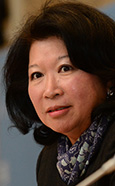 Mari Elka Pangestu (WTO/Studio Casagrande)
GENEVA — Mari Elka Pangestu, an Indonesian government minister who is a graduate of the University of California at Davis, was among the first group of candidates for director general of the World Trade Organization to present themselves to the WTO General Council and the media on Tuesday.
Davis is the land grant school for the state of California and one of the most prominent agricultural universities in the country. Pangestu got a doctoral degree in international trade, finance and monetary economics in 1986.
During her meeting with the media, she told The Hagstrom Report that, while she did not concentrate on agriculture at Davis, she took classes in agricultural economics and that many of the cases and examples used in her course were agricultural.
After earning her degree, Pangestu returned to Indonesia and worked as a researcher until she was appointed Indonesia’s trade minister in 2001. She held that post until 2011 when she was appointed minister of tourism and the creative economy.
Pangestu said she had learned that “agriculture features importantly” in all economies and that both commercial, export-oriented agriculture and subsistence agriculture need to be defended.
In her role as trade minister, Pangestu has led the G-33, a group of developing countries that have said a Doha Round agreement must take into account the interests of poor farmers in developing countries and not force them to compete directly with imports from developed countries until they are ready.
Whether her degree from Davis could help her in getting support from the U.S. government for her candidacy is unclear. Other candidates also have studied in the United States, and the Office of the U.S. Trade Representative has recently asked for WTO consultations with Indonesia over the country’s strict non-automatic import licensing requirements for horticultural products and drastic reductions in quotas for beef and other animal product imports.
Pangestu defended her government’s actions, saying, “What Indonesia is doing is not protectionism, but making sure we have fair trade.”
At least some of the Indonesian regulations appear to have been put in place after she changed jobs, and a journalist who regularly covers the WTO suggested to Pangestu that she had been removed as trade minister because she was too free trade-oriented.
Pangestu replied that she had been given the opportunity to create a new ministry focused on “the forces of the future.”
According to her biography submitted to the WTO, she has created a strategic plan for 16 tourism destinations in Indonesia and is working on policies to encourage the arts, film, advertising, digital content and other creative industries.
Pangestu told journalists, “I believe in trade and development,” said she and wants to be viewed as the “trade and development minister,” and not for trade policy alone.
Asked about the idea that it is Latin America’s or Africa’s turn to head the WTO, she said the WTO leader “should be chosen on the basis of merit, capability and capacity,” and that the job should go to “a global leader.”
“I am a tenacious negotiator. Don't be fooled by the smile,” she said. “I don't give up easily.”
Pangestu said support for her to win the job starts with her own government and that the other Association of Southeast Asian Nations countries have extended “tacit support.”
On the issue of being a female candidate, Pangestu said she is one of four women Cabinet ministers in Indonesia.
“There is a glass ceiling, but if you show you can do the work you can also be a role model for other women,” she said. “If you show you are capable, you can break it.”
She also said that it is “an empirical fact” that “companies that have higher percentages of women on their boards have higher profitability.”
Discussing what her priorities would be as director general, she said that the WTO is not just the Doha Round, but at the ministerial meeting in Bali in December “we should have deliverables that are balanced” — an apparent reference to the need to make proposals that would be of interest to both developed and developing countries.
(While a deal on trade facilitation is considered trade ministers’ highest priority for Bali, the G-33 countries led by Indonesia have proposed a food security package that would allow more subsidization for subsistence farmers.)
Pangestu noted that the agricultural proposals that have been called “an early harvest” are now called “stepping stones”
“The ‘early harvest’ should not be the only harvest,” she said. “We should never lose sight of the ‘big harvest.’ ”
GENEVA — Mari Elka Pangestu, an Indonesian government minister who is a graduate of the University of California at Davis, was among the first group of candidates for director general of the World Trade Organization to present themselves to the WTO General Council and the media on Tuesday.
Davis is the land grant school for the state of California and one of the most prominent agricultural universities in the country. Pangestu got a doctoral degree in international trade, finance and monetary economics in 1986.
During her meeting with the media, she told The Hagstrom Report that, while she did not concentrate on agriculture at Davis, she took classes in agricultural economics and that many of the cases and examples used in her course were agricultural.
After earning her degree, Pangestu returned to Indonesia and worked as a researcher until she was appointed Indonesia’s trade minister in 2001. She held that post until 2011 when she was appointed minister of tourism and the creative economy.
Pangestu said she had learned that “agriculture features importantly” in all economies and that both commercial, export-oriented agriculture and subsistence agriculture need to be defended.
In her role as trade minister, Pangestu has led the G-33, a group of developing countries that have said a Doha Round agreement must take into account the interests of poor farmers in developing countries and not force them to compete directly with imports from developed countries until they are ready.
Whether her degree from Davis could help her in getting support from the U.S. government for her candidacy is unclear. Other candidates also have studied in the United States, and the Office of the U.S. Trade Representative has recently asked for WTO consultations with Indonesia over the country’s strict non-automatic import licensing requirements for horticultural products and drastic reductions in quotas for beef and other animal product imports.
Pangestu defended her government’s actions, saying, “What Indonesia is doing is not protectionism, but making sure we have fair trade.”
At least some of the Indonesian regulations appear to have been put in place after she changed jobs, and a journalist who regularly covers the WTO suggested to Pangestu that she had been removed as trade minister because she was too free trade-oriented.
Pangestu replied that she had been given the opportunity to create a new ministry focused on “the forces of the future.”
According to her biography submitted to the WTO, she has created a strategic plan for 16 tourism destinations in Indonesia and is working on policies to encourage the arts, film, advertising, digital content and other creative industries.
Pangestu told journalists, “I believe in trade and development,” said she and wants to be viewed as the “trade and development minister,” and not for trade policy alone.
Asked about the idea that it is Latin America’s or Africa’s turn to head the WTO, she said the WTO leader “should be chosen on the basis of merit, capability and capacity,” and that the job should go to “a global leader.”
“I am a tenacious negotiator. Don't be fooled by the smile,” she said. “I don't give up easily.”
Pangestu said support for her to win the job starts with her own government and that the other Association of Southeast Asian Nations countries have extended “tacit support.”
On the issue of being a female candidate, Pangestu said she is one of four women Cabinet ministers in Indonesia.
“There is a glass ceiling, but if you show you can do the work you can also be a role model for other women,” she said. “If you show you are capable, you can break it.”
She also said that it is “an empirical fact” that “companies that have higher percentages of women on their boards have higher profitability.”
Discussing what her priorities would be as director general, she said that the WTO is not just the Doha Round, but at the ministerial meeting in Bali in December “we should have deliverables that are balanced” — an apparent reference to the need to make proposals that would be of interest to both developed and developing countries.
(While a deal on trade facilitation is considered trade ministers’ highest priority for Bali, the G-33 countries led by Indonesia have proposed a food security package that would allow more subsidization for subsistence farmers.)
Pangestu noted that the agricultural proposals that have been called “an early harvest” are now called “stepping stones”
“The ‘early harvest’ should not be the only harvest,” she said. “We should never lose sight of the ‘big harvest.’ ”
