WTO Profile: Tim Groser, New Zealand
January 31, 2013 | 08:03 PM Filed in: WTO Profiles
Editor’s note: Today we continue our series of profiles of the nine candidates to become the World Trade Organization’s next director-general.
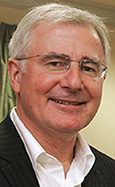 Tim Groser (WTO/Studio Casagrande)
GENEVA — Tim Groser, the New Zealand trade minister who chaired the agriculture negotiations when he was New Zealand’s ambassador to the World Trade Organization, told the General Council and reporters on Wednesday that the next director-general must deal not with a “crisis” but a problem of long term “relevance.”
International institutions that don’t advance, he said, “don’t disappear,” but just cease to be “the go-to place.”
In his speech and at his news conference, Groser, who was born in Scotland but grew up and was educated in New Zealand, made a series of statements that appeared to be criticisms of the style of Pascal Lamy, the director-general for the past eight years.
But when The Hagstrom Report asked him what he would do differently from Lamy, he said he would “never comment” on his predecessor’s performance.
Groser told reporters that a lot of the responsibility of the WTO “falls on the shoulders of the director-general” who faces a question of “You can talk the talk, but can you walk the walk?”
In his speech, Groser implied that the proposals presented to trade ministers must be more complete than those in recent years.
“The idea that you can take to ministers hideously complex issues that are completely undercooked at official level and expect ministers to solve them has been tested to destruction. Effective work with senior officials is absolutely crucial,” he said.
The next director-general, he said, needs to be an advocate against protectionism who is “on an equal footing” with the heads of other major international organizations, senior ministers and “at times” heads of governments.
At the news conference, Groser recalled the success of the Uruguay Round in which he participated. He said while he was the New Zealand ambassador to the WTO and chaired the agriculture negotiations in the Doha Round, he had achieved an outline of an agreement on agriculture, and that the remaining problems in the Doha Round are in nonagricultural market access.
“Agriculture is not the white-hot center of dispute,” he said.
Groser also noted that the WTO’s decision to appoint four New Zealanders in a row to chair the agriculture negotiations was an indication of New Zealanders’ skills.
His statement that he achieved a definitive agreement on agriculture would be open to contention, however, since the agriculture talks are still going on.
Groser also told the media that he “could be a trade journalist’s nightmare” because “When it comes to highly sensitive issues, I believe the director-general should say nothing in public.”
(Several journalists attending the news conference told The Hagstrom Report that not talking to the press has been Groser’s style and that this decision means that the press relies on the views on people involved in the negotiations rather than his.)
Groser said that his role with the media would be to “defend the institution and publicize its success.” Communicating with the media, he said, is “central” but not to dispute resolution or negotiations.
On the issue of whether it is the developing countries’ turn to lead the WTO, Groser said that is developing countries eliminate him as a candidate, they would be using the WTO for “foreign policy” rather than trade purposes.
“If this is a foreign policy question we’re trying to address in the director-general, then I’m not the answer,” he said. But if the issue is “more substantive, then I’m the answer.”
In his speech Groser made the case that the WTO is still central, even though many countries have entered into bilateral and regional trade agreements during the 12 years that the Doha Round has stalled.
“The fact remains that in spite of the growth of regionalism, the overwhelming bulk of world trade remains non-preferential MFN [most favored nation] trade underpinned by WTO rules,” Groser said.
When people get too enthusiastic about the Asia Pacific region, Groser said, he asks “Who is China’s largest trading partner?”
The answer, he said, is the 27 member countries of the European Union. The jobs of people working in companies in Latin America, Asia Pacific or Africa who export commodities or components to China, he added, ultimately depend on European consumers.
The WTO, he said, needs to “oversee and facilitate” the implementation of trade agreements so that fewer cases are brought to Geneva.
“We can’t use the Exocet missile that is the WTO dispute settlement on every occasion,” he said. “Every time we see countries falling behind in the implementation of their obligations, we can’t just say ‘off with their heads’.”
To avoid disputes rising to a higher level, he said, the WTO needs to help more with trade-related assistance and capacity building. He said he would also study the “judicial function” to see if it needs more resources.
Groser emphasized that the trade ministers do need to achieve success at the meeting in Bali in December.
“Even a relatively modest result would help us,” he said.
But beyond Bali, he said, he does not have one plan for reviving the WTO, but “maybe a dozen different working hypotheses that, if we could get buy-in from the membership to at least one of them might eventually fix the near paralysis in our negotiating function.”
GENEVA — Tim Groser, the New Zealand trade minister who chaired the agriculture negotiations when he was New Zealand’s ambassador to the World Trade Organization, told the General Council and reporters on Wednesday that the next director-general must deal not with a “crisis” but a problem of long term “relevance.”
International institutions that don’t advance, he said, “don’t disappear,” but just cease to be “the go-to place.”
In his speech and at his news conference, Groser, who was born in Scotland but grew up and was educated in New Zealand, made a series of statements that appeared to be criticisms of the style of Pascal Lamy, the director-general for the past eight years.
But when The Hagstrom Report asked him what he would do differently from Lamy, he said he would “never comment” on his predecessor’s performance.
Groser told reporters that a lot of the responsibility of the WTO “falls on the shoulders of the director-general” who faces a question of “You can talk the talk, but can you walk the walk?”
In his speech, Groser implied that the proposals presented to trade ministers must be more complete than those in recent years.
“The idea that you can take to ministers hideously complex issues that are completely undercooked at official level and expect ministers to solve them has been tested to destruction. Effective work with senior officials is absolutely crucial,” he said.
The next director-general, he said, needs to be an advocate against protectionism who is “on an equal footing” with the heads of other major international organizations, senior ministers and “at times” heads of governments.
At the news conference, Groser recalled the success of the Uruguay Round in which he participated. He said while he was the New Zealand ambassador to the WTO and chaired the agriculture negotiations in the Doha Round, he had achieved an outline of an agreement on agriculture, and that the remaining problems in the Doha Round are in nonagricultural market access.
“Agriculture is not the white-hot center of dispute,” he said.
Groser also noted that the WTO’s decision to appoint four New Zealanders in a row to chair the agriculture negotiations was an indication of New Zealanders’ skills.
His statement that he achieved a definitive agreement on agriculture would be open to contention, however, since the agriculture talks are still going on.
Groser also told the media that he “could be a trade journalist’s nightmare” because “When it comes to highly sensitive issues, I believe the director-general should say nothing in public.”
(Several journalists attending the news conference told The Hagstrom Report that not talking to the press has been Groser’s style and that this decision means that the press relies on the views on people involved in the negotiations rather than his.)
Groser said that his role with the media would be to “defend the institution and publicize its success.” Communicating with the media, he said, is “central” but not to dispute resolution or negotiations.
On the issue of whether it is the developing countries’ turn to lead the WTO, Groser said that is developing countries eliminate him as a candidate, they would be using the WTO for “foreign policy” rather than trade purposes.
“If this is a foreign policy question we’re trying to address in the director-general, then I’m not the answer,” he said. But if the issue is “more substantive, then I’m the answer.”
In his speech Groser made the case that the WTO is still central, even though many countries have entered into bilateral and regional trade agreements during the 12 years that the Doha Round has stalled.
“The fact remains that in spite of the growth of regionalism, the overwhelming bulk of world trade remains non-preferential MFN [most favored nation] trade underpinned by WTO rules,” Groser said.
When people get too enthusiastic about the Asia Pacific region, Groser said, he asks “Who is China’s largest trading partner?”
The answer, he said, is the 27 member countries of the European Union. The jobs of people working in companies in Latin America, Asia Pacific or Africa who export commodities or components to China, he added, ultimately depend on European consumers.
The WTO, he said, needs to “oversee and facilitate” the implementation of trade agreements so that fewer cases are brought to Geneva.
“We can’t use the Exocet missile that is the WTO dispute settlement on every occasion,” he said. “Every time we see countries falling behind in the implementation of their obligations, we can’t just say ‘off with their heads’.”
To avoid disputes rising to a higher level, he said, the WTO needs to help more with trade-related assistance and capacity building. He said he would also study the “judicial function” to see if it needs more resources.
Groser emphasized that the trade ministers do need to achieve success at the meeting in Bali in December.
“Even a relatively modest result would help us,” he said.
But beyond Bali, he said, he does not have one plan for reviving the WTO, but “maybe a dozen different working hypotheses that, if we could get buy-in from the membership to at least one of them might eventually fix the near paralysis in our negotiating function.”
