WTO Profile: Heminio Blanco, Mexico
February 06, 2013 | 07:17 PM Filed in: WTO Profiles
Editor’s note: Today we continue bringing you profiles of the nine candidates to become the World Trade Organization’s next director-general. The candidates presented themselves to the WTO General Council and the media last week in Geneva. The profiles will continue this week.
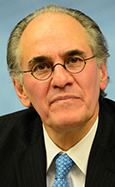 Heminio Blanco
GENEVA — Herminio Blanco, Mexico’s chief negotiator in the North American Free Trade Agreement and the Uruguay Round, said here last week that his success in those negotiations show that he could be a successful director-general of the World Trade Organization.
Blanco, who also served as Mexico’s minister of trade and industry, told reporters it is vital for the WTO to show progress in the long stalled Doha Round of negotiations when the trade ministers of the member countries meet in Bali in December.
“Having a failure in Bali would be a game changer for the WTO,” he said. The December meeting, he added, “must send a message to the world that things can be done in Geneva.”
If he is selected, and if member countries have not reached “convergence” on a proposed Doha Round package by September 1 when the new director-general is scheduled to take over, Blanco said he would travel to world capitals to convince governments to support it.
A positive outcome in Bali is also vital to restoring the interest of the private sector in the WTO, he said. The business community’s current lack of interest “is dangerous because this organization is losing relevance,” he said.
Twelve years of negotiations on the Doha Round without reaching an agreement show that “something is going fundamentally wrong with the WTO,” he said.
Blanco said he could achieve success because “conditions can change” and that he has the “desire” and “conviction” to do the job. The Doha package in Bali “might not be the perfect solution,” he said, but a “substantive package” could be approved.
The WTO’s greatest success in recent years has been opposing protectionism, he said. But he noted that members have established “new and ever more imaginative behind-the-border protectionist measures.” If the protectionist measures do not subside and the WTO does not implement enforceable rules, the dispute settlement mechanism will become “overburdened,” he said in his presentation to the General Council.
Asked about the role of the emerging economies in what are still classified as developing countries, Blanco said he includes Mexico in that group and that a “solution” to the impasse will “require these countries to do more than the rest of the developing countries.”
Blanco said the issue of exchange rates should be left up to the International Monetary Fund. Bringing the topic into the WTO “would be highly divisive,” he said.
Asked whether he will gain the support of the United States in his campaign to become director-general, Blanco said that he has “met with many countries and will meet with many countries.”
In discussing his negotiating skills with reporters, Blanco noted that NAFTA became the model for the U.S. agreements with Central America and Chile, that under his leadership Mexico reached the first free trade agreement with the European Union and also reached agreements with other countries. Reaching agreement with small countries requires “creativeness,” he told reporters.
“The director-general is not a negotiator but should be an effective bridge-builder,” he told the General Council. “Ten FTA with 34 countries guarantee that I am a bridge-builder.”
His post-government experience in the private sector, he said, has given him “a different vantage point” on “new modes of production and the importance of services.”
In his presentation to the WTO General Council, Blanco said he played a key role in the design and implementation of the deep structural changes that have made of Mexico a more open and competitive economy.
He said he designed and implemented a far-reaching reform program to eliminate red tape, enhance efficiency and increase transparency in Mexico’s public sector, and that he also implemented a managerial re-engineering of the Ministry of Trade and Industry.
Blanco said that in his 12 years of experience in the private sector, he has advised national and local governments, corporations and international organizations on trade policy and international economic strategic matters.
He said his company, IQOM Inteligencia Comercia, is the only international trade service in Mexico and Latin America that provides an online day-by-day analysis of governmental trade measures affecting corporations doing business in the region. His firm, he said, has helped the Mexican government in the implementation of special software applications to promote the participation of small and medium enterprises in international trade.
Blanco received a doctorate in economics from the University of Chicago in 1978 and a bachelor’s degree in economics from Instituto Tecnologico y de Estudios Superiores de Monterrey in 1971. He was an assistant professor at Rice University in Houston from 1980 to 1985, and has also taught in Mexico.
GENEVA — Herminio Blanco, Mexico’s chief negotiator in the North American Free Trade Agreement and the Uruguay Round, said here last week that his success in those negotiations show that he could be a successful director-general of the World Trade Organization.
Blanco, who also served as Mexico’s minister of trade and industry, told reporters it is vital for the WTO to show progress in the long stalled Doha Round of negotiations when the trade ministers of the member countries meet in Bali in December.
“Having a failure in Bali would be a game changer for the WTO,” he said. The December meeting, he added, “must send a message to the world that things can be done in Geneva.”
If he is selected, and if member countries have not reached “convergence” on a proposed Doha Round package by September 1 when the new director-general is scheduled to take over, Blanco said he would travel to world capitals to convince governments to support it.
A positive outcome in Bali is also vital to restoring the interest of the private sector in the WTO, he said. The business community’s current lack of interest “is dangerous because this organization is losing relevance,” he said.
Twelve years of negotiations on the Doha Round without reaching an agreement show that “something is going fundamentally wrong with the WTO,” he said.
Blanco said he could achieve success because “conditions can change” and that he has the “desire” and “conviction” to do the job. The Doha package in Bali “might not be the perfect solution,” he said, but a “substantive package” could be approved.
The WTO’s greatest success in recent years has been opposing protectionism, he said. But he noted that members have established “new and ever more imaginative behind-the-border protectionist measures.” If the protectionist measures do not subside and the WTO does not implement enforceable rules, the dispute settlement mechanism will become “overburdened,” he said in his presentation to the General Council.
Asked about the role of the emerging economies in what are still classified as developing countries, Blanco said he includes Mexico in that group and that a “solution” to the impasse will “require these countries to do more than the rest of the developing countries.”
Blanco said the issue of exchange rates should be left up to the International Monetary Fund. Bringing the topic into the WTO “would be highly divisive,” he said.
Asked whether he will gain the support of the United States in his campaign to become director-general, Blanco said that he has “met with many countries and will meet with many countries.”
In discussing his negotiating skills with reporters, Blanco noted that NAFTA became the model for the U.S. agreements with Central America and Chile, that under his leadership Mexico reached the first free trade agreement with the European Union and also reached agreements with other countries. Reaching agreement with small countries requires “creativeness,” he told reporters.
“The director-general is not a negotiator but should be an effective bridge-builder,” he told the General Council. “Ten FTA with 34 countries guarantee that I am a bridge-builder.”
His post-government experience in the private sector, he said, has given him “a different vantage point” on “new modes of production and the importance of services.”
In his presentation to the WTO General Council, Blanco said he played a key role in the design and implementation of the deep structural changes that have made of Mexico a more open and competitive economy.
He said he designed and implemented a far-reaching reform program to eliminate red tape, enhance efficiency and increase transparency in Mexico’s public sector, and that he also implemented a managerial re-engineering of the Ministry of Trade and Industry.
Blanco said that in his 12 years of experience in the private sector, he has advised national and local governments, corporations and international organizations on trade policy and international economic strategic matters.
He said his company, IQOM Inteligencia Comercia, is the only international trade service in Mexico and Latin America that provides an online day-by-day analysis of governmental trade measures affecting corporations doing business in the region. His firm, he said, has helped the Mexican government in the implementation of special software applications to promote the participation of small and medium enterprises in international trade.
Blanco received a doctorate in economics from the University of Chicago in 1978 and a bachelor’s degree in economics from Instituto Tecnologico y de Estudios Superiores de Monterrey in 1971. He was an assistant professor at Rice University in Houston from 1980 to 1985, and has also taught in Mexico.
