WTO Profile: Taeho Bark, Korea
February 07, 2013 | 09:11 PM Filed in: WTO Profiles
Editor’s note: Today we continue bringing you profiles of the nine candidates to become the World Trade Organization’s next director-general. The candidates presented themselves to the WTO General Council and the media last week in Geneva.
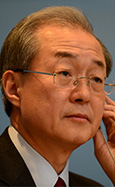 Taeho Bark
GENEVA — Korean trade minister Taeho Bark said his own life experience watching his country grow from poverty to affluence would help him convince other countries to complete the Doha Round of trade negotiations if he becomes the next director-general of the World Trade Organization.
“I am realistic optimist,” Bark said here last week. “I was born during the Korean War and grew up in a poor and shattered country. During my lifetime, things changed dramatically.”
In a speech to the WTO General Council, he said he witnessed firsthand what can be achieved.
“I firmly believe that any country can move forward if provided with the right kinds of help and circumstances,” Bark said. “Korea did not reach its current level of development on its own. We had help and we had access to world markets.”
Bark also said that his own role in implementing the Korean-U.S. free trade agreement despite domestic political criticism would also help him in trying to revive the long stalled Doha Round. Korea was not interested in bilateral free trade agreements until the North American Free Trade Agreement joined the United States, Mexico and Canada.
“We were shocked,” he said and then “got interested” in such agreements.
“My recent experience in dealing with opposition to trade agreements in Korea would serve in helping to map the outreach activities of the WTO and member countries,” he said. “I have done so by utilizing both traditional methods of engaging in a dialogue with sectoral groups including farmers, as well as new media such as social network services.”
But Bark said he would not necessarily recommend that other countries give corporations the same kind of assistance that Korea gave its companies when they started.
“There is no right or wrong policy on development,” he said, added that he believes Taiwan, Singapore, and Hong Kong have all taken different routes. But he acknowledged that Korea had “supported domestic producers and that “the end result” is that the country has big companies like Samsung.
“In Korea we talk about economic democratization,” he said. “We need some creativity to have balance.”
WTO insiders have said Bark’s prospects for the job are not great because a Korean is director-general of the United Nations and a Korean-American heads the World Bank.
Korea has also joined the Organization for Economic Cooperation and Development but maintains its self-declared status as a developing country in the WTO, which allows it to provide subsidies and restrict imports in ways that developed countries cannot.
“In a way we are a developing country,” Bark said. When Korea is required to take action as an “advanced country” it does so in many ways, “except in sensitive areas like agriculture,” he said.
Bark said he has “hope” for North Korea but said he could not comment on how he would view North Korea joining the WTO.
Bark told the member country representatives who make up the General Council that his candidacy is based on the need to “build trust in the organization” and “revive the culture for negotiations.”
“For the WTO, this means recreating a vibrant culture of Geneva-centered negotiations,” he said. “We must seek to restore the original Geneva-culture, whereby we discuss our differences frankly to explore possible solutions.”
Bark said he wants to strengthen the trust among the member representatives and the trust between them and the WTO secretariat.
On the differences among countries on the Doha Round, he said, “What remains is to take a fresh perspective on how to sort them out.”
Development, he said, is the “core pillar” of the Doha Round negotiations. He acknowledged that development means different things to different nations.
“To some countries,” he said, “development means joining and moving up in the global value chain, and to others, stabilizing their financial systems. To many countries, it still means lifting themselves out of poverty. The WTO can contribute to achieving all of these concepts of development through greater trade opportunities, capacity building, and predictable rules.”
He added that developing countries also need aid to be able to trade, and said the WTO should strengthen its relationship with the World Bank, development agencies and the regional development banks. He said the WTO must also address “21st century issues, such as green energy, the global value chain, food security, standard and safety, natural resources, and water management,” which he said all have direct and indirect effects on trade.
Bark obtained his doctoral degree in economics from the University of Wisconsin at Madison in 1983 and his bachelor’s degree from Seoul National University in 1975.
He has been Korea’s minister of trade since December 2011. From 2007 to 2010, he was chairman of the Korea Trade Commission, which sets trade remedy measures and laws. He also served as a commissioner from 1999 to 2004.
Since 1997 he has been a professor at the Graduate School of International Studies at Seoul National University, and from 2006 to 2010 he served as dean of the school. During his tenure he established a graduate program in international development policy for developing countries. Earlier he was a researcher at the Korea Institute for International Economic Policy and was an economist advising the president of Korea on the Uruguay Round negotiations.
From 1987 to 1989 he was a researcher at the Korea Development Institute, the Korean government’s first think tank. From 1983 to 1987 he ataught economics at Georgetown University, where he said he developed a wide range of contacts at the International Monetary Fund, the World Bank and other international institutions.
Through all these experiences as a college professor, in a research organization and in government, Bark said he had learned to talk “horizontally” to people to gain credibility.
Biography — Taeho Bark, Korea
Video of Bark speech
Audio of Bark press conference
GENEVA — Korean trade minister Taeho Bark said his own life experience watching his country grow from poverty to affluence would help him convince other countries to complete the Doha Round of trade negotiations if he becomes the next director-general of the World Trade Organization.
“I am realistic optimist,” Bark said here last week. “I was born during the Korean War and grew up in a poor and shattered country. During my lifetime, things changed dramatically.”
In a speech to the WTO General Council, he said he witnessed firsthand what can be achieved.
“I firmly believe that any country can move forward if provided with the right kinds of help and circumstances,” Bark said. “Korea did not reach its current level of development on its own. We had help and we had access to world markets.”
Bark also said that his own role in implementing the Korean-U.S. free trade agreement despite domestic political criticism would also help him in trying to revive the long stalled Doha Round. Korea was not interested in bilateral free trade agreements until the North American Free Trade Agreement joined the United States, Mexico and Canada.
“We were shocked,” he said and then “got interested” in such agreements.
“My recent experience in dealing with opposition to trade agreements in Korea would serve in helping to map the outreach activities of the WTO and member countries,” he said. “I have done so by utilizing both traditional methods of engaging in a dialogue with sectoral groups including farmers, as well as new media such as social network services.”
But Bark said he would not necessarily recommend that other countries give corporations the same kind of assistance that Korea gave its companies when they started.
“There is no right or wrong policy on development,” he said, added that he believes Taiwan, Singapore, and Hong Kong have all taken different routes. But he acknowledged that Korea had “supported domestic producers and that “the end result” is that the country has big companies like Samsung.
“In Korea we talk about economic democratization,” he said. “We need some creativity to have balance.”
WTO insiders have said Bark’s prospects for the job are not great because a Korean is director-general of the United Nations and a Korean-American heads the World Bank.
Korea has also joined the Organization for Economic Cooperation and Development but maintains its self-declared status as a developing country in the WTO, which allows it to provide subsidies and restrict imports in ways that developed countries cannot.
“In a way we are a developing country,” Bark said. When Korea is required to take action as an “advanced country” it does so in many ways, “except in sensitive areas like agriculture,” he said.
Bark said he has “hope” for North Korea but said he could not comment on how he would view North Korea joining the WTO.
Bark told the member country representatives who make up the General Council that his candidacy is based on the need to “build trust in the organization” and “revive the culture for negotiations.”
“For the WTO, this means recreating a vibrant culture of Geneva-centered negotiations,” he said. “We must seek to restore the original Geneva-culture, whereby we discuss our differences frankly to explore possible solutions.”
Bark said he wants to strengthen the trust among the member representatives and the trust between them and the WTO secretariat.
On the differences among countries on the Doha Round, he said, “What remains is to take a fresh perspective on how to sort them out.”
Development, he said, is the “core pillar” of the Doha Round negotiations. He acknowledged that development means different things to different nations.
“To some countries,” he said, “development means joining and moving up in the global value chain, and to others, stabilizing their financial systems. To many countries, it still means lifting themselves out of poverty. The WTO can contribute to achieving all of these concepts of development through greater trade opportunities, capacity building, and predictable rules.”
He added that developing countries also need aid to be able to trade, and said the WTO should strengthen its relationship with the World Bank, development agencies and the regional development banks. He said the WTO must also address “21st century issues, such as green energy, the global value chain, food security, standard and safety, natural resources, and water management,” which he said all have direct and indirect effects on trade.
Bark obtained his doctoral degree in economics from the University of Wisconsin at Madison in 1983 and his bachelor’s degree from Seoul National University in 1975.
He has been Korea’s minister of trade since December 2011. From 2007 to 2010, he was chairman of the Korea Trade Commission, which sets trade remedy measures and laws. He also served as a commissioner from 1999 to 2004.
Since 1997 he has been a professor at the Graduate School of International Studies at Seoul National University, and from 2006 to 2010 he served as dean of the school. During his tenure he established a graduate program in international development policy for developing countries. Earlier he was a researcher at the Korea Institute for International Economic Policy and was an economist advising the president of Korea on the Uruguay Round negotiations.
From 1987 to 1989 he was a researcher at the Korea Development Institute, the Korean government’s first think tank. From 1983 to 1987 he ataught economics at Georgetown University, where he said he developed a wide range of contacts at the International Monetary Fund, the World Bank and other international institutions.
Through all these experiences as a college professor, in a research organization and in government, Bark said he had learned to talk “horizontally” to people to gain credibility.
Biography — Taeho Bark, Korea
Video of Bark speech
Audio of Bark press conference
