USDA launches data-sharing website
April 29, 2013 | 04:48 PM
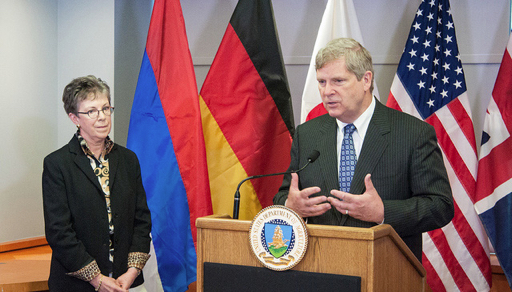 Agriculture Secretary Tom Vilsack and Agriculture Undersecretary for Research, Education, and Economics Dr. Catherine Woteki held a press conference after giving remarks at the G-8 International Conference on Open Data for Agriculture today in Washington, D.C. (USDA/Bob Nichols)
The Agriculture Department is launching a data-sharing website as part of an effort to encourage governments around the world to share agricultural data, particularly for the benefit of developing countries, Agriculture Secretary Tom Vilsack said today.
Vilsack made the announcement at the G-8 International Conference on Open Data for Agriculture. The conference was organized by USDA but is being held at the International Finance Corporation headquarters in Washington. It fulfills a promise made by leaders of the G-8 countries when they met at Camp David, Md., in 2012 and committed themselves to a New Alliance for Food Security and Nutrition.
Delegations from 15 nations and the European Commission are participating in the two-day meeting.
“The digital revolution fueled by open data is starting to do for the modern world of agriculture what the industrial revolution did for agricultural productivity over the past century,” said Vilsack.
“Open access to data will help combat food insecurity today while laying the groundwork for a sustainable agricultural system to feed a population that is projected to be more than nine billion by 2050.”
The new database runs across all the USDA activity areas from crop production data and soil information to food safety and nutrition and other federal agencies as well.
In his speech, Vilsack noted that the database would include information on regulatory decisions, specifically on genetic modification.
“As we work together to promote coexistence in agriculture — an issue that is not just a U.S. matter but a global one as well — we can benefit from understanding how decisions were made on new products and technology,” Vilsack said.
“This is information that other countries can use to help them address similar regulatory concerns in an efficient and timely manner,” he said.
“The U.S. has been a leader in making information about its regulatory actions on genetically engineered seeds, for example, available to other nations so they may better synchronize their regulatory processes.”
But when speaking to reporters, Vilsack said that the database would contain information on organic agriculture as well, and that the goal of the database “is not to include or advance a particular form of production.”
Catherine Woteki, the Agriculture undersecretary for research, education and economics, told reporters that the data sets could be used by plant and animal breeders whether they are engaged in genetic modification or conventional breeding.
The ultimate goal of the database, Woteki said, is food security.
“Speed is incredibly important, Vilsack said. “You don’t get advances by holding onto information.”
