Reinsch: Wyden will devote less attention to cattle, and how Congress may proceed on TPA and TPP
January 10, 2014 | 05:05 PM
Incoming Senate Finance Committee Chairman Ron Wyden, D-Ore., will not pay as much attention to the cattle industry as outgoing Senate Finance Committee Chairman Max Baucus, D-Mont., has, National Foreign Trade Council President Bill Reinsch said this week.
President Barack Obama has nominated Baucus to be U.S. ambassador to China, and Wyden is in line to take over Finance as chairman.
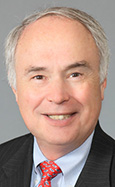
Bill Reinsch
“There is going to be a new chairman. His priorities are likely to be different,” Reinsch said at an NFTC roundtable for reporters on Wednesday. “You are all going to write a lot fewer stories about beef than you have in the last five years.”
Baucus sits on the Senate Agriculture Committee and is well known for his support for his state’s beef and wheat industries. Wyden does not sit on Agriculture and, while Oregon has both cattle and wheat, it has also has more diversified agriculture than Montana, including fruit and vegetables and wine.
Reinsch and his staff noted that Wyden has taken a great interest in the digital economy.
Reinsch, who on Thursday endorsed the trade promotion authority (TPA) bill that Baucus introduced, said that last year NFTC had predicted “a lot of activity and no results,” but this year is predicting “a lot of activity and some results.”

Charles Dittrich
Charles Dittrich, the NFTC senior vice president for regional trade initiatives, said that he had been reassured by the Trans-Pacific Partnership announcements in Singapore in December, and noted that the “landing zones” trade negotiators spoke of signaled they are aware of the trade-offs that must be made to reach agreement.
The Obama administration is “pretty committed” to TPP and all the countries involved with the possible exception of Japan are “crossing half way through the desert,” Dittrich said, adding that meant reversing course would be more expensive than moving forward.
But on the issue of whether will be phase-ins in market access for certain products, Dittrich questioned at what length of time “is a phase-in a carve-out?”
Reinsch said that TPA and TPP would reinforce each other, with Congress more interested in passing TPA if a TPP agreement seems close and other countries more interested in reaching agreement if the Obama administration has clear negotiating authority.
Of the demands of House Ways and Means Committee ranking member Sander Levin, D-Mich., and other Democrats that the bill needs to contain a bigger role for Congress and more transparency to garner their support, Reinsch said that greater consultation is easier to achieve than greater transparency because revealing details of the agreements to other committees causes memhers of Finance and Ways and Means and their staffs to fear a loss of jurisdiction.
But Reinsch said it’s most important to win some Democratic co-sponsorship of the TPA bill.
“What worries me is not that they don’t get it done, just that it is a nasty partisan fight that sets back congressional efforts to build bipartisanship on issues,” he said, adding that it will be much better if there is a “critical mass” for the bill in both parties.
But Reinsch said it is easier to convince House Democrats to support the bill than to get them to cosponsor it. It’s one thing to be in favor of the bill, he said, and “another to have your name plastered out there.”
Reinsch also noted that he and NFTC favor reauthorization of trade adjustment authority, although there are arguments that programs should be developed to help all people who have lost jobs, not just those who have lost them due to trade liberalization.
On the argument over whether globalization has increased income inequality, he said, “Globalization has decreased inequality among countries, but increased it within countries” because “globalization accelerates the pace of change.”
Reinsch also noted that NFTC , which was founded in 1914 to advocate a worldwide rules-based trade system, will have events in Washington and other cities to celebrate its centennial.
President Barack Obama has nominated Baucus to be U.S. ambassador to China, and Wyden is in line to take over Finance as chairman.
Bill Reinsch
“There is going to be a new chairman. His priorities are likely to be different,” Reinsch said at an NFTC roundtable for reporters on Wednesday. “You are all going to write a lot fewer stories about beef than you have in the last five years.”
Baucus sits on the Senate Agriculture Committee and is well known for his support for his state’s beef and wheat industries. Wyden does not sit on Agriculture and, while Oregon has both cattle and wheat, it has also has more diversified agriculture than Montana, including fruit and vegetables and wine.
Reinsch and his staff noted that Wyden has taken a great interest in the digital economy.
Reinsch, who on Thursday endorsed the trade promotion authority (TPA) bill that Baucus introduced, said that last year NFTC had predicted “a lot of activity and no results,” but this year is predicting “a lot of activity and some results.”
Charles Dittrich
Charles Dittrich, the NFTC senior vice president for regional trade initiatives, said that he had been reassured by the Trans-Pacific Partnership announcements in Singapore in December, and noted that the “landing zones” trade negotiators spoke of signaled they are aware of the trade-offs that must be made to reach agreement.
The Obama administration is “pretty committed” to TPP and all the countries involved with the possible exception of Japan are “crossing half way through the desert,” Dittrich said, adding that meant reversing course would be more expensive than moving forward.
But on the issue of whether will be phase-ins in market access for certain products, Dittrich questioned at what length of time “is a phase-in a carve-out?”
Reinsch said that TPA and TPP would reinforce each other, with Congress more interested in passing TPA if a TPP agreement seems close and other countries more interested in reaching agreement if the Obama administration has clear negotiating authority.
Of the demands of House Ways and Means Committee ranking member Sander Levin, D-Mich., and other Democrats that the bill needs to contain a bigger role for Congress and more transparency to garner their support, Reinsch said that greater consultation is easier to achieve than greater transparency because revealing details of the agreements to other committees causes memhers of Finance and Ways and Means and their staffs to fear a loss of jurisdiction.
But Reinsch said it’s most important to win some Democratic co-sponsorship of the TPA bill.
“What worries me is not that they don’t get it done, just that it is a nasty partisan fight that sets back congressional efforts to build bipartisanship on issues,” he said, adding that it will be much better if there is a “critical mass” for the bill in both parties.
But Reinsch said it is easier to convince House Democrats to support the bill than to get them to cosponsor it. It’s one thing to be in favor of the bill, he said, and “another to have your name plastered out there.”
Reinsch also noted that he and NFTC favor reauthorization of trade adjustment authority, although there are arguments that programs should be developed to help all people who have lost jobs, not just those who have lost them due to trade liberalization.
On the argument over whether globalization has increased income inequality, he said, “Globalization has decreased inequality among countries, but increased it within countries” because “globalization accelerates the pace of change.”
Reinsch also noted that NFTC , which was founded in 1914 to advocate a worldwide rules-based trade system, will have events in Washington and other cities to celebrate its centennial.
