Kirk: Americans need to know that trade is good
January 31, 2014 | 04:37 PM

PALM SPRINGS, Calif. — American agribusiness leaders need to promote free trade with the general public and understand that enforcement of trade laws is a key to increasing support for trade agreements, former U.S. Trade Representative Ron Kirk told the International Dairy Foods Association here this week.
In a speech to IDFA’s annual Dairy Forum on Sunday, Kirk, who served as President Barack Obama’s trade representative from 2009 until he stepped down last year, noted that he had served on the board of Dean Foods for six years and understood the role of exports in creating jobs in the United States.
But he said Americans are worried that trade agreements will take away jobs rather than create them.
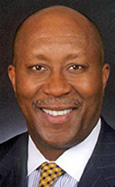
Ron Kirk
“For most Americans, it is completely counterintuitive to open up” the U.S. economy to more imports, he said. Noting that 95 percent of consumers live outside the borders of the United States, he said, “The opportunity we have is a planet that is growing.”
Polls taken while he was trade representative showed that more Americans thought they would win the lottery than thought “trade is good for America,” and more people said they believed in extraterrestrial life than believed in trade agreements, he said.
When Obama nominated him for trade representative “it was not universally applauded,” he noted, because as mayor of Dallas he had supported the North American Free Trade Agreement.
Kirk said he had heard the opposition to NAFTA because his wife, who was raised in Cleveland and Detroit, had relatives who worked in auto plants.
“My friends in labor thought I was a unicorn,” Kirk said jokingly, noting that he was using a polite expression for what they really said.
When Kirk took the job his main responsibility was to convince Congress to approve the free trade agreements with Korea, Colombian and Panama that had been negotiated by the George W. Bush administration.
“I inherited three trade agreements because the two sides were not talking to each other,” Kirk explained. “So I took the time to bring everybody in [to] tell me ‘what you are angry about, what we can do differently.’ ”
That process included talking with workers and labor leaders and as a result, he said, he decided “to spend more time enforcing trade agreements so that everyone including farmers would have access to other markets.”
Listening to labor unions and enforcing agreements, particularly suing China over its dumping of tires on the U.S. market, convinced labor to “at least soften their objections” a little bit and Congress approved the Korea, Panama and Colombian agreements.
But Kirk said he worries about continuing negative American attitudes toward trade, which may only intensify with the role of the online “blogosphere” in setting public attitudes.
“Make sure your employees know how much of your business is exports,” he said.
He cited U.S. farm productivity as an example of an industry that produces a lot with far fewer people than a century ago,
“You are in an very, very enviable position,” he told the dairy processors. “No one is worried about putting food grown in this country on the table.”
In a series of answers to questions from the nearly 1,000 people attending the Dairy Forum, Kirk made the following observations:
▪ China will open its market to keep its people happy and avoid social conflict.
▪ Obama needs trade promotion authority to finish trade agreements, not to negotiate them.
▪ Finishing the Trans-Pacific Partnership (TPP) agreement would help convince other countries that the United States also wants an aggressive agenda for the World Trade Organization Doha round.
▪ Helping the WTO “to define itself” is more than just completing the Doha agreement.
▪ TPP won’t be finished during the first quarter of this year, but it is important to finish it as soon as possible because “the longer it drags on the more it looks like Doha.”
▪ The challenge in the Trans-Atlantic Trade and Investment Partnership negotiations with the European Union is to “merge legal systems” of developed countries.
▪ Europe is really nervous about being left behind by TPP.
Kirk said his biggest disappointment as trade representative was the difficulty in increasing trade with India, a country that he said is moving in the right direction, “but bless their hearts, they just can’t make decisions.”
“How are we going to get dairy products into India?,” Kirk asked.
The United States is “not going to give up on India,” he said, but in the short term he advised the dairy executives to look toward Southeast Asia and Africa.
“It is better to push on an open door,” he said. “You’ve got great growth potential in other parts of the world.
His biggest lesson at USTR, he said, was learning how much leadership matters and that the single biggest common denominator of all elected officials in the world is that they represent a farmer.
“Nobody gets as much attention as farmers. In the developing world, they are 80 percent of the voters. Every decision is made with an eye to the farmers.”
Kirk said he doesn’t spend his time post-USTR working specifically on trade, but that he is still concerned about the export of U.S. products.
“Nothing pisses me off more than when I get to Russia and order a New York strip and it is from New Zealand,” he said.
