Development bank and GHI launch Latin America-Caribbean agriculture initiative
May 13, 2014 | 03:51 PM
Latin America and the Caribbean could increase their agricultural productivity to help feed the world as the population grows, but countries need to change agricultural and trade policies and the private sector needs to invest more in the region, according to a report highlighted today at the National Press Club and on Capitol.
The report was published by the Inter-American Development Bank and the Global Harvest Initiative.
The Washington-based IDB is the development bank for Latin America. The Global Harvest Initiative is a private-sector group composed of companies that want to export seeds, farm equipment and technology to the region.
 Margaret Zeigler
At the press club event, Margaret Zeigler, executive director of GHI, credited companies including Monsanto, DuPont, Accenture, John Deere, Elanco and Mitsubishi with sponsoring the report.
While GHI’s activities are world wide, Zeigler said, “We are focused on Latin America because there is a lot of low-hanging fruit that could be harvested easily.”
At the end of the conference she noted that for Latin America to be more productive, GHI, IDB and their partners will “encourage governments in the region to put agriculture front and center in their agenda.”
The events today mark the beginning of a three-year partnership between the IDB and GHI to promote the report’s recommendations at country, regional and global levels, according to an agreement obtained by The Hagstrom Report.
The IDB will promote agricultural reform in the Latin American, GHI will promote the ideas with Congress, the Agriculture Department, the U.S. Agency for International Development ,and both will raise the recommendations at international events such as the World Food Prize, the World Economic Forum and former President Bill Clinton’s global initiative, the document says.
The report lists Latin America’s agricultural advantages including “a third of the world’s fresh water resources, the most of any developing region when measured on a per capita basis, and more than a quarter of the world’s medium-to-high potential farmland,” but notes that agricultural productivity in many areas is not as high as it could be. (See following story.)
The report recommends that governments shift away from direct subsidies to farmers and “toward public goods, especially agricultural research and development, extension services, critical infrastructure, trade and integration policies, and supporting technical innovation that is applicable to farming.”
The report does not state what policies need to be changed in each country, but it includes a number of examples of successes that could be replicated in other countries.
At a panel discussion at the press club, several speakers involved in the study stressed that agricultural production in Latin America can be intensified without ruining the region’s natural resource base.
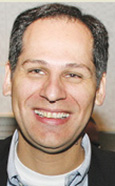 Eduardo Bastos
Eduardo Bastos, the government affairs leader at Dow Chemical in Brazil, noted that the growing middle classes in developing countries will demand more protein in the future, which will mean a need for increased meat production. Dow, he said, had participated in a project in the Pará region of Brazil to help ranchers increase productivity and reduce the press for deforestation.
Production went from 150 kilos of beef per hectare to 600 kilos per hectare, he said, adding that the initiative is now being promoted in Colombia and Mexico.
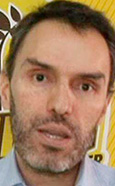
Ricardo Sánchez
Riffing off the title of a Gabriel Garcia Marquez novel, Ricardo Sánchez, director of sustainable food security of the Nature Conservancy, said that there had been “500 years of solitude” between agricultural production and environmental policites.
At the Nature Conservancy, Sánchez said, “We are moving beyond romanticism.”
For years, he noted, “we have been blaming the cows for destruction of the forest,” but that higher productivity can resolve that issue.
Sánchez also said it is time to stop treating the 14 million small famers in Latin America as “subsistence farmers” and help them move into market-based agriculture.
He also noted that the age of farmers in Latin America is rising and said young farmers need to receive help with more modern methods of production and communication.
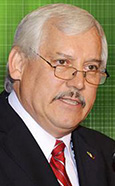 Victor Villalobos
Victor Villalobos, director general of the Inter-American Institute for Cooperation in Agriculture, noted that his institute had been founded by then-Vice President and former Agriculture Secretary Henry Wallace in 1942, and said his group wants to increase productivity and income for small and medium-sized farmers. Villalobos noted that only 17 percent of the agricultural land in Latin American and the Caribbean is covered by insurance.
The lack of insurance protection is particularly problematic in areas that subject to hurricanes and flooding, he said.
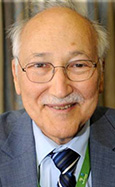 Philippe Villers
Philippe Villers, president of Grain Pro, a company that makes hermetically sealed grain bags, noted that better storage is needed in hot humid climates for both crops post-harvest and seeds for the next growing season, but that his relatively cheap technology to keep products dry and insect-free, has been “brought to scale in a only a few countries.”
One key to improving the lives of young farmers, Villers said, is to make it possible for them to store their crops. Many subsistence farmers “lead a miserable life” because they can’t store their crops safely and have to sell them and buy them back.
With global warming, Villers said, “you cannot rely on production increases alone” to feed a growing world population.
Bastos concluded the press club session by noting that he wants to “tear down the walls of prejudice” so that nongovernmental organizations, retailers, the private sector and government to improve Latin American agriculture.
▪ The Next Global Breadbasket: How Latin America Can Feed the World
▪ — Summary
The report was published by the Inter-American Development Bank and the Global Harvest Initiative.
The Washington-based IDB is the development bank for Latin America. The Global Harvest Initiative is a private-sector group composed of companies that want to export seeds, farm equipment and technology to the region.
At the press club event, Margaret Zeigler, executive director of GHI, credited companies including Monsanto, DuPont, Accenture, John Deere, Elanco and Mitsubishi with sponsoring the report.
While GHI’s activities are world wide, Zeigler said, “We are focused on Latin America because there is a lot of low-hanging fruit that could be harvested easily.”
At the end of the conference she noted that for Latin America to be more productive, GHI, IDB and their partners will “encourage governments in the region to put agriculture front and center in their agenda.”
The events today mark the beginning of a three-year partnership between the IDB and GHI to promote the report’s recommendations at country, regional and global levels, according to an agreement obtained by The Hagstrom Report.
The IDB will promote agricultural reform in the Latin American, GHI will promote the ideas with Congress, the Agriculture Department, the U.S. Agency for International Development ,and both will raise the recommendations at international events such as the World Food Prize, the World Economic Forum and former President Bill Clinton’s global initiative, the document says.
The report lists Latin America’s agricultural advantages including “a third of the world’s fresh water resources, the most of any developing region when measured on a per capita basis, and more than a quarter of the world’s medium-to-high potential farmland,” but notes that agricultural productivity in many areas is not as high as it could be. (See following story.)
The report recommends that governments shift away from direct subsidies to farmers and “toward public goods, especially agricultural research and development, extension services, critical infrastructure, trade and integration policies, and supporting technical innovation that is applicable to farming.”
The report does not state what policies need to be changed in each country, but it includes a number of examples of successes that could be replicated in other countries.
At a panel discussion at the press club, several speakers involved in the study stressed that agricultural production in Latin America can be intensified without ruining the region’s natural resource base.
Eduardo Bastos, the government affairs leader at Dow Chemical in Brazil, noted that the growing middle classes in developing countries will demand more protein in the future, which will mean a need for increased meat production. Dow, he said, had participated in a project in the Pará region of Brazil to help ranchers increase productivity and reduce the press for deforestation.
Production went from 150 kilos of beef per hectare to 600 kilos per hectare, he said, adding that the initiative is now being promoted in Colombia and Mexico.
Ricardo Sánchez
Riffing off the title of a Gabriel Garcia Marquez novel, Ricardo Sánchez, director of sustainable food security of the Nature Conservancy, said that there had been “500 years of solitude” between agricultural production and environmental policites.
At the Nature Conservancy, Sánchez said, “We are moving beyond romanticism.”
For years, he noted, “we have been blaming the cows for destruction of the forest,” but that higher productivity can resolve that issue.
Sánchez also said it is time to stop treating the 14 million small famers in Latin America as “subsistence farmers” and help them move into market-based agriculture.
He also noted that the age of farmers in Latin America is rising and said young farmers need to receive help with more modern methods of production and communication.
Victor Villalobos, director general of the Inter-American Institute for Cooperation in Agriculture, noted that his institute had been founded by then-Vice President and former Agriculture Secretary Henry Wallace in 1942, and said his group wants to increase productivity and income for small and medium-sized farmers. Villalobos noted that only 17 percent of the agricultural land in Latin American and the Caribbean is covered by insurance.
The lack of insurance protection is particularly problematic in areas that subject to hurricanes and flooding, he said.
Philippe VillersPhilippe Villers, president of Grain Pro, a company that makes hermetically sealed grain bags, noted that better storage is needed in hot humid climates for both crops post-harvest and seeds for the next growing season, but that his relatively cheap technology to keep products dry and insect-free, has been “brought to scale in a only a few countries.”
One key to improving the lives of young farmers, Villers said, is to make it possible for them to store their crops. Many subsistence farmers “lead a miserable life” because they can’t store their crops safely and have to sell them and buy them back.
With global warming, Villers said, “you cannot rely on production increases alone” to feed a growing world population.
Bastos concluded the press club session by noting that he wants to “tear down the walls of prejudice” so that nongovernmental organizations, retailers, the private sector and government to improve Latin American agriculture.
▪ The Next Global Breadbasket: How Latin America Can Feed the World
▪ — Summary
