CoBank to announce rural investment fund at Rural Opportunity conference today
July 24, 2014 | 12:01 PM
CoBank, the large cooperative agricultural bank, will announce today that it has created a Rural Infrastructure Opportunity Fund to finance the projects that USDA’s Rural Development division usually funds, such as electricity, water and sewer projects and rural business loans and grants, CoBank CEO Robert Engel and Agriculture Secretary Tom Vilsack said late Wednesday.
In a White House-arranged call whose content was embargoed until midnight, Engel and Vilsack said that CoBank, as the “anchor investor,” had committed $10 billion to get the fund off the ground, and that Capital Peak Asset Management, a firm with offices in Denver and Washington, will manage the new fund and recruit more investors.
The formal announcement will occur on the second day of the Rural Opportunity Investment Conference sponsored by the White House Rural Council, which Vilsack set up and chairs.
The Obama administration has invited a range of Wall Street investors and other finance industry figures to Washington to inform them that private investors, foundations and pension funds can find places to put their money in rural America. The first day of the conference was held at the White House Wednesday, and the second day will be held today at the Washington Hilton Hotel.
The fund appears to be a way to provide more money for rural development, a USDA function that rarely gets the amount of money USDA administrators believe it should. Farm bills always provide authorizations for a variety of rural development activities at USDA, but appropriators usually say that USDA’s other responsibilities come first.
“We are looking forward to partnering with CoBank,” Vilsack said.
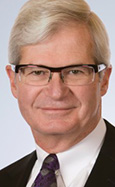 Robert Engel
Engel said that USDA and CoBank “share a common mission to serve agriculture and rural America.”
Based outside Denver, CoBank is a national cooperative bank that provides loans, leases, export financing and other financial services to agribusinesses and rural power, water and communications providers in all 50 states. It is a member of the Farm Credit System.
The White House said in a fact sheet that “The fund is immediately open for business and more investors can now add to the initial $10 billion in available capital. The new fund will allow a wide variety of new participants, including pension funds, endowments, foundations, and other institutional investors that have not traditionally had access to these markets to invest in rural development.”
“In some cases, projects may be funded entirely through private sector dollars.” the fact sheet said. “In others, private dollars may be leveraged with and extend critical government loan and grant programs.”
The White House also released a set of summaries of government “investments” in each state under the Obama administration.
At the end of the fact sheet, the White House said, “The White House Rural Council is chaired by Secretary Vilsack, who in his role as Secretary of the Department of Agriculture has made unprecedented state-by-state investments in rural America. ... Secretary Vilsack invites the private sector to continue building innovative partnerships that drive investments, economic growth, and prosperity.” (See links below)
USDA will apparently play a role in deciding what projects the fund will back, and will also provide some loan guarantees.
“USDA and other agencies will help to identify rural projects in need of financing through the new fund and through other such private sources and public-private partnerships,” the White House said.
“Target investments will include rural community facilities (especially health care and educational facilities), rural water and wastewater systems, rural energy projects, rural broadband expansion efforts, local and regional food systems, and other rural infrastructure.”
Vilsack noted that there is more demand for funds than the Rural Utilities Service can handle.
Engel said he envisions putting perhaps 500 small water projects into a pool for big investors. He also said he envisions scenarios under which USDA takes the first 10 percent of the risk, CoBank takes the next 15 percent, and “the market says that looks pretty good.”
“There is plenty of capital out there,” Engel said, but the issue is finding a match between investors and projects in rural America.
Engel said he believed that Vilsack had “opened up” investors’ eyes during the sessions at the White House.
“The execution of this is up to us collectively,” Engel said.
▪ White House — Fact Sheet: Increasing Investment in Rural America ▪ USDA — State-by-state Investment in Rural America ▪ CoBank ▪ Capitol Peak Asset Management
In a White House-arranged call whose content was embargoed until midnight, Engel and Vilsack said that CoBank, as the “anchor investor,” had committed $10 billion to get the fund off the ground, and that Capital Peak Asset Management, a firm with offices in Denver and Washington, will manage the new fund and recruit more investors.
The formal announcement will occur on the second day of the Rural Opportunity Investment Conference sponsored by the White House Rural Council, which Vilsack set up and chairs.
The Obama administration has invited a range of Wall Street investors and other finance industry figures to Washington to inform them that private investors, foundations and pension funds can find places to put their money in rural America. The first day of the conference was held at the White House Wednesday, and the second day will be held today at the Washington Hilton Hotel.
The fund appears to be a way to provide more money for rural development, a USDA function that rarely gets the amount of money USDA administrators believe it should. Farm bills always provide authorizations for a variety of rural development activities at USDA, but appropriators usually say that USDA’s other responsibilities come first.
“We are looking forward to partnering with CoBank,” Vilsack said.
Engel said that USDA and CoBank “share a common mission to serve agriculture and rural America.”
Based outside Denver, CoBank is a national cooperative bank that provides loans, leases, export financing and other financial services to agribusinesses and rural power, water and communications providers in all 50 states. It is a member of the Farm Credit System.
The White House said in a fact sheet that “The fund is immediately open for business and more investors can now add to the initial $10 billion in available capital. The new fund will allow a wide variety of new participants, including pension funds, endowments, foundations, and other institutional investors that have not traditionally had access to these markets to invest in rural development.”
“In some cases, projects may be funded entirely through private sector dollars.” the fact sheet said. “In others, private dollars may be leveraged with and extend critical government loan and grant programs.”
The White House also released a set of summaries of government “investments” in each state under the Obama administration.
At the end of the fact sheet, the White House said, “The White House Rural Council is chaired by Secretary Vilsack, who in his role as Secretary of the Department of Agriculture has made unprecedented state-by-state investments in rural America. ... Secretary Vilsack invites the private sector to continue building innovative partnerships that drive investments, economic growth, and prosperity.” (See links below)
USDA will apparently play a role in deciding what projects the fund will back, and will also provide some loan guarantees.
“USDA and other agencies will help to identify rural projects in need of financing through the new fund and through other such private sources and public-private partnerships,” the White House said.
“Target investments will include rural community facilities (especially health care and educational facilities), rural water and wastewater systems, rural energy projects, rural broadband expansion efforts, local and regional food systems, and other rural infrastructure.”
Vilsack noted that there is more demand for funds than the Rural Utilities Service can handle.
Engel said he envisions putting perhaps 500 small water projects into a pool for big investors. He also said he envisions scenarios under which USDA takes the first 10 percent of the risk, CoBank takes the next 15 percent, and “the market says that looks pretty good.”
“There is plenty of capital out there,” Engel said, but the issue is finding a match between investors and projects in rural America.
Engel said he believed that Vilsack had “opened up” investors’ eyes during the sessions at the White House.
“The execution of this is up to us collectively,” Engel said.
▪ White House — Fact Sheet: Increasing Investment in Rural America ▪ USDA — State-by-state Investment in Rural America ▪ CoBank ▪ Capitol Peak Asset Management
