Vilsack continues promotion of private-sector financing in rural America
July 30, 2014 | 03:33 PM
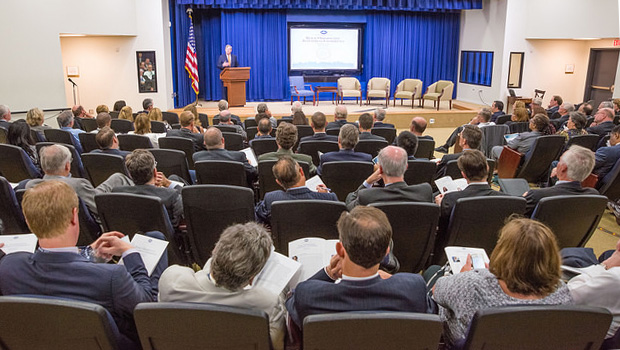
Last week’s White House Rural Council inaugural Rural Opportunity Investment conference in Washington brought together leaders from the business community and financial institutions, senior government officials, economic development experts and others from across the country to discuss potential investments in business and infrastructure projects in rural communities. (USDA/Bob Nichols)
Agriculture Secretary Tom Vilsack is in Bridgeport, N.Y., today to continue promoting the potential of the Rural Infrastructure Opportunity Fund USDA launched with CoBank last week, although there are still some questions about exactly how the fund will function and what benefits it will provide to rural America.
Vilsack is hosting a roundtable with rural development leaders to discuss the new fund and the types of rural infrastructure projects that could benefit from it, as well as the Obama administration’s broader efforts to secure private investment in rural projects and businesses, a Vilsack spokesman told The Hagstrom Report.
The trip to Bridgeport is the first since the White House Rural Investment Opportunity Conference last Wednesday and Thursday. At that event Vilsack used a combination of patriotic and commercial appeals to investors to encourage them to put more money into rural America.
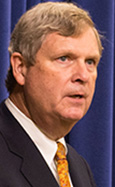
In one of several speeches during the conference, Vilsack noted that rural America provides more than its proportionate share of soldiers for the military, but that rural America is also experiencing a population decline to due to a combination of mechanization in agriculture and lack of opportunity for young people.
But at the same time, Vilsack said he believed there are opportunities for investment in rural America that Wall Street has missed, either because investors live in cities and are focused on them or because the investments are not of a size to interest investment funds.
“We are here today because it is an important place and a challenged place but there are extraordinary opportunities,” Vilsack told the audience on the second day of the conference. And while he urged the investors to take a fresh look at rural America, he also told the representatives of the states, foundations and nonprofit groups that their “challenge is to go back to the states and think creatively” about how to put these projects together.
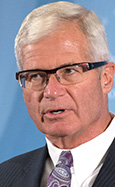
Although Vilsack stressed that there are opportunities to finance infrastructure projects and business investments, CoBank CEO Bob Engel made it clear in his speech that the Rural Infrastructure Opportunity Fund will focus on rural electricity, water, communications and health care centers.
Engel said CoBank, the largest of the Farm Credit System institutions, has watched USDA finance these projects, but “the agency has finite resources and there is an understandable backlog of projects across many sectors.”
“We must do everything we can to match rural infrastructure projects to capital,” Engel said.
He also said that CoBank has no concerns that it is acting outside its authorities in establishing the fund. Commercial bankers constantly watch the Farm Credit System’s activities and frequently urge Congress to investigate whether the Farm Credit banks are making loans that are inappropriate to their mandate. But Engel said that he would welcome any congressional scrutiny of CoBank’s activities.
At a news conference, Engel and Vilsack said that there are many other financing possibilities for private business and that Capitol Peak Asset Management, the Colorado investment company that CoBank has hired to raise more capital, may become involved in those projects.
Vilsack said that the USDA Bioenergy Assistance Program and other USDA programs could be used as a starting point for business investments, and noted that USDA has also established a relationship with Advantage Capital Agribusiness Partners to develop an equity fund.
In a summary of what he had learned from the conference, Vilsack said USDA and other federal agencies need to market their loan portfolios better, that Congress talks about infrastructure development but doesn’t act on it, and that USDA needs to reduce “friction” in the system and make decisions faster.
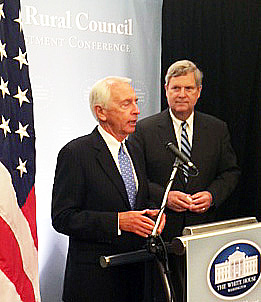
Kentucky Gov. Steve Beshear, a Democrat, also spoke to the conference, citing proposals in his state to address the decline of the tobacco and coal industries as examples of the future of rural America.
Kentucky has invested the money from the tobacco settlement in diversifying the economy, Beshear said, noting that farmers, who have expanded in cattle, corn, soybeans and fruits and vegetables, “are doing better than ever.”
Adding that Kentucky was the first state to adopt Common Core Standards for English and science and has raised its high school dropout age from 16 to 18, Beshear said, “The world is coming to invest in Kentucky.”
The governor also told the investors that they don’t need a philanthropic reason to invest in his state. “You can make money,” Beshear said.
The conference also included workshops bringing together advocates for everything from water and waste to local food hubs, but they were not open to reporters.
Several attendees said the workshops did not present ideas that would be new to people with a knowledge of agriculture or rural America, but that they may have been informative to the investors.
Reactions to the conference were mixed.
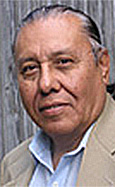
Rudy Arredando of the National Latino Farmers & Ranchers Association said the idea of private-sector investors backing water and waste projects in the poorest communities in rural America, rather than USDA, is questionable because investors do not have long-term commitments to those communities.
Arredando said that if private investors do back those projects, they should commit to holding the investments until maturity.
But he said he understands why USDA is trying this approach.
“We have a dysfunctional Congress that is exacerbating rural decay,” Arredando said. At the same time, he said, USDA has closed offices so that farmers and other rural residents in the western states sometimes have to travel 50 to 100 miles to see officials.
Arredando said he “absolutely” trusts government more than the private sector to deliver services.
American Farm Bureau Federation President Bob Stallman questioned how big the capital problem is in rural America. Stallman said he believes that most good business ideas can generate loans from rural banks.
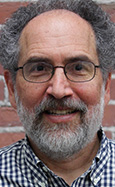
But Peter Stein, the managing director of the Lyme Timber Company, a Vermont firm, said he was impressed with the conference.
Stein has been involved in public-private partnerships since he was an official of the Trust for Public Land. Lyme Timber harvests trees, Stein explained, but commits itself not to convert forest land to commercial or residential development.
“This secretary is excellent,” Stein said, referring to Vilsack. “I’m kind of amazed that the agencies can get this focused.”
