Alliance four years in the making
September 24, 2014 | 11:25 PM
NEW YORK CITY — The Global Alliance for Climate-Smart Agriculture was launched here today, but its origins go back four years to a meeting between the head of agriculture at the World Bank and Dutch agriculture officials.
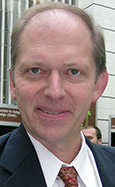 Juergen Voegele
Juergen Voegele, the senior director of the World Bank’s agriculture global practice, noted at the launch ceremony that he had come to the conclusion that a multidisciplinary approach was needed to address climate change and agriculture, and that international institutions, countries, academic and farmers had to be involved .
Introduced as the “founding father of the alliance,” Voegele said that in his 30-year career in international development he had never experienced an idea that had come to fruition in less than five years.
“It is all your willingness go move from a silo approach to an integrated approach,” he said, adding that agriculture is a “huge part of the problem, a huge part of the potential solution.”
The real potential for agriculture in the climate change debate, he said, is “to absorb carbon dioxide above ground and below ground.”
Not every production system will help with the “triple win” of increasing productivity, adaptation and mitigation, he said, “but most will.”
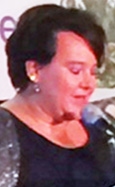 Sharon Dijksma
Agriculture research has to move beyond its focus on increasing productivity with a small nod to nutrition outcomes to including the impact on the climate, Voegele said.
“This is not a new religion, a new philosophy, it is the simple recognition that future agriculture systems can’t be sustainable unless the climate is taken into consideration,” he said.
Netherlands Agriculture Minister Sharon Dijksma noted that there had been meetings in The Hague in 2010, in Hanoi in 2012, in Johannesburg in 2013 and a meeting in the Netherlands again this summer before the launch.
Frank Rijsberman, the CEO of CGIAR, the international network of research institutions, said his organization would continue to focus on the smallholder farmer and the poor and vulnerable, mostly women.
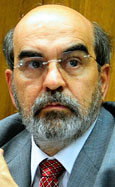 José Graziano da Silva
U.N. Food and Agriculture Organization Director-General José Graziano da Silva said the alliance “can’t get caught up in one solution.”
Graziano da Silva noted “it is important to keep in mind” that the world already produces more food than is needed today, although that food is not distributed properly. There is no reason, he said, that the world should not be able to increase production and feed the growing population in the future.
The debate, he said, must be based on science and not on inflammatory ideological discussions.
In what might be a note of caution, Graziano da Silva said the world “needs to explore different solutions and climate-smart agriculture is one of them.”
▪ Global Alliance for Climate-Smart Agriculture
Juergen Voegele, the senior director of the World Bank’s agriculture global practice, noted at the launch ceremony that he had come to the conclusion that a multidisciplinary approach was needed to address climate change and agriculture, and that international institutions, countries, academic and farmers had to be involved .
Introduced as the “founding father of the alliance,” Voegele said that in his 30-year career in international development he had never experienced an idea that had come to fruition in less than five years.
“It is all your willingness go move from a silo approach to an integrated approach,” he said, adding that agriculture is a “huge part of the problem, a huge part of the potential solution.”
The real potential for agriculture in the climate change debate, he said, is “to absorb carbon dioxide above ground and below ground.”
Not every production system will help with the “triple win” of increasing productivity, adaptation and mitigation, he said, “but most will.”
Agriculture research has to move beyond its focus on increasing productivity with a small nod to nutrition outcomes to including the impact on the climate, Voegele said.
“This is not a new religion, a new philosophy, it is the simple recognition that future agriculture systems can’t be sustainable unless the climate is taken into consideration,” he said.
Netherlands Agriculture Minister Sharon Dijksma noted that there had been meetings in The Hague in 2010, in Hanoi in 2012, in Johannesburg in 2013 and a meeting in the Netherlands again this summer before the launch.
Frank Rijsberman, the CEO of CGIAR, the international network of research institutions, said his organization would continue to focus on the smallholder farmer and the poor and vulnerable, mostly women.
U.N. Food and Agriculture Organization Director-General José Graziano da Silva said the alliance “can’t get caught up in one solution.”
Graziano da Silva noted “it is important to keep in mind” that the world already produces more food than is needed today, although that food is not distributed properly. There is no reason, he said, that the world should not be able to increase production and feed the growing population in the future.
The debate, he said, must be based on science and not on inflammatory ideological discussions.
In what might be a note of caution, Graziano da Silva said the world “needs to explore different solutions and climate-smart agriculture is one of them.”
▪ Global Alliance for Climate-Smart Agriculture
