School food trends: From simple to something special
July 23, 2015 |06:51 PM
SALT LAKE CITY — At the School Nutrition Association’s annual trade show at the Salt Palace last week, exhibits ranged from commodity groups showing school food service administrators the many ways in which they can use basic foods, to groups offering a more refined approach.
The latter group included the Farm to School Network; Barilla, the Italian pasta maker; and Revolution Foods, which promises fresher, healthier to-go meals. This is the third of four photo essays on the SNA trade show.
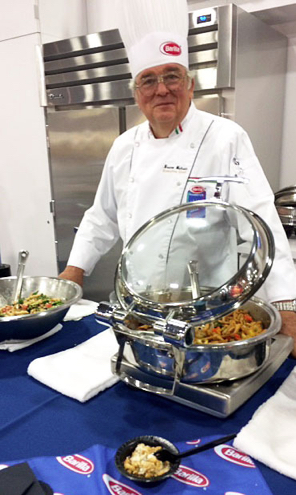
Bruno Wehren, executive chef of Barilla, serves his recipes for pasta and mac ‘n’ cheese. Some school cooks have complained that whole-grain pasta is difficult to cook. A Barilla company spokesman said that whole-wheat pasta cannot be cooked a day in advance because the presence of bran has an impact on the process. He said that Barilla whole-grain pasta is superior to “commodity pasta” and that it can be cooked partially in advance. The company warns cooks, however, not to overcook because it will continue cooking in a steam table. (Jerry Hagstrom/The Hagstrom Report)
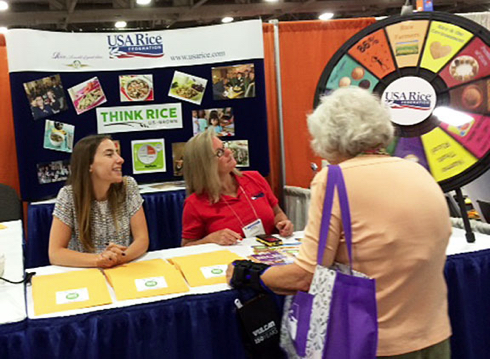
Representatives of the USA Rice Federation promote a range of products. (Jerry Hagstrom/The Hagstrom Report)
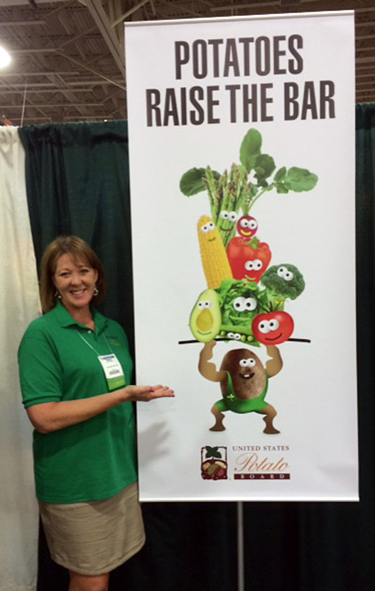
Potatoes have gotten a lot of criticism in recent years, but Meredith Myers of the United States Potato Board says schools love potatoes because “when potatoes are served, kids buy lunch.” Now schools can get potatoes in many forms – ethnic or with spices – that fit into healthier meals rules, Myers adds. (Jerry Hagstrom/The Hagstrom Report)
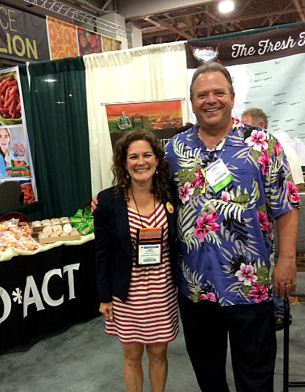
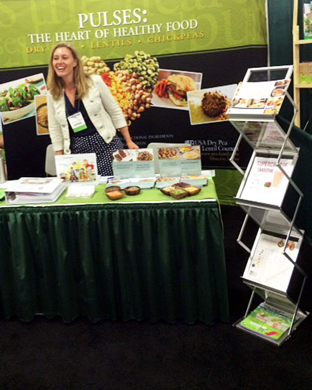
Left: Helen Dombalis of the National Farm to School Network talks to Murray Harris of ProAct, a distributor, about whether the farmers in her network could distribute products through his firm. Right: The healthier meals rules have created a larger place for pulses in school meals, and industry officials are on hand to explain how dry peas, lentils and chickpeas fit into students' diets. (Jerry Hagstrom/The Hagstrom Report)
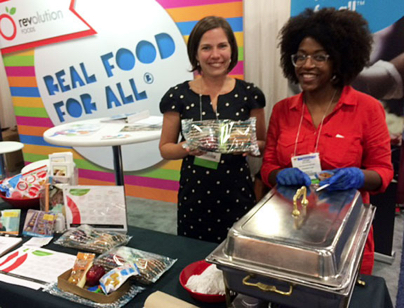
Representatives of Revolution Foods say they specialize in take-away suppers and grab-and-go meals made from fresh ingredients. (Jerry Hagstrom/The Hagstrom Report)
The latter group included the Farm to School Network; Barilla, the Italian pasta maker; and Revolution Foods, which promises fresher, healthier to-go meals. This is the third of four photo essays on the SNA trade show.
Bruno Wehren, executive chef of Barilla, serves his recipes for pasta and mac ‘n’ cheese. Some school cooks have complained that whole-grain pasta is difficult to cook. A Barilla company spokesman said that whole-wheat pasta cannot be cooked a day in advance because the presence of bran has an impact on the process. He said that Barilla whole-grain pasta is superior to “commodity pasta” and that it can be cooked partially in advance. The company warns cooks, however, not to overcook because it will continue cooking in a steam table. (Jerry Hagstrom/The Hagstrom Report)
Representatives of the USA Rice Federation promote a range of products. (Jerry Hagstrom/The Hagstrom Report)
Potatoes have gotten a lot of criticism in recent years, but Meredith Myers of the United States Potato Board says schools love potatoes because “when potatoes are served, kids buy lunch.” Now schools can get potatoes in many forms – ethnic or with spices – that fit into healthier meals rules, Myers adds. (Jerry Hagstrom/The Hagstrom Report)
Left: Helen Dombalis of the National Farm to School Network talks to Murray Harris of ProAct, a distributor, about whether the farmers in her network could distribute products through his firm. Right: The healthier meals rules have created a larger place for pulses in school meals, and industry officials are on hand to explain how dry peas, lentils and chickpeas fit into students' diets. (Jerry Hagstrom/The Hagstrom Report)
Representatives of Revolution Foods say they specialize in take-away suppers and grab-and-go meals made from fresh ingredients. (Jerry Hagstrom/The Hagstrom Report)
